
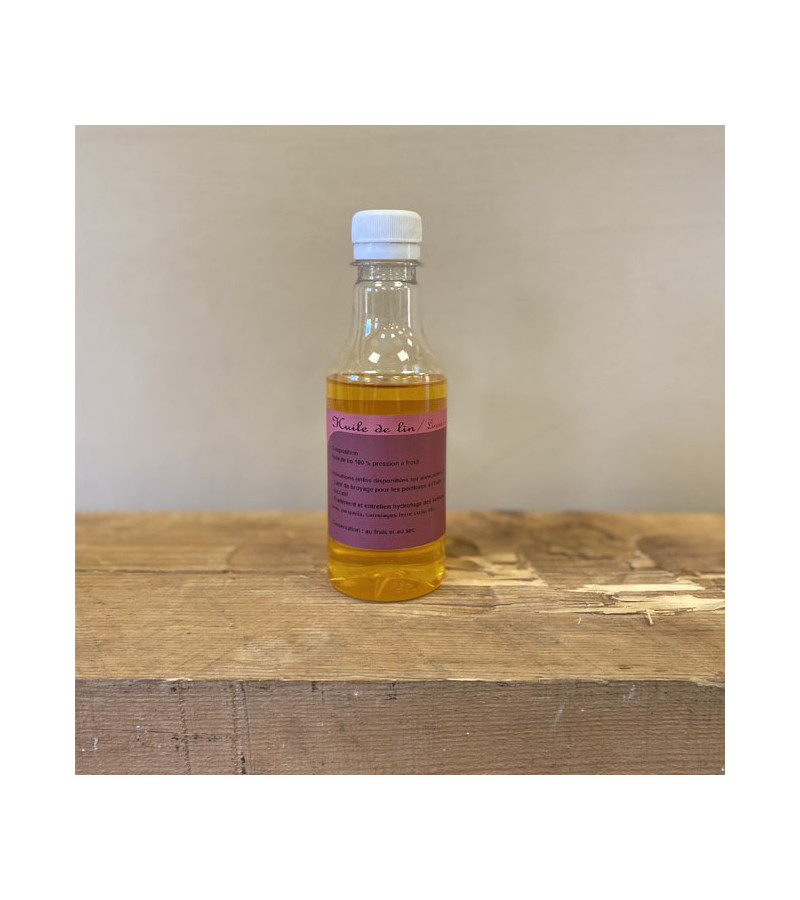

Linseed oil, appreciated for its siccativity, is the most used, as a grinding binder, to develop oil colors. It is also a necessary ingredient in the flour paint recipe.

Legal notices

Delivery policy

Return policy

Google reviews
We have selected a first cold pressing linseed oil. The seeds are cleaned and crushed and filtered without refining, without solvent. This linseed oil can be added to color to improve its consistency, fluidity and increase its gloss and transparency. It is used for the water-repellent treatment of porous surfaces, namely wood, parquet, terracotta tiles, bricks, outdoor wood furniture, ocher paints, glazes, etc.
It is possible to use pure linseed oil or linseed oil mixed with turpentine.
Pure linseed oil : to ensure the best penetration into the wood, it is recommended to warm the oil slightly (between 60°C and 100°C maximum). This makes it more fluid without producing solvent fumes and does not interfere with the drying time between coats (allow at least 24 hours, or longer if necessary, between applications). Pure linseed oil only ignites at around 300°C.
Linseed oil + turpentine : linseed oil is often combined with turpentine to treat and protect wood. The linseed oil provides protective and decorative properties, while the turpentine acts as a solvent. We recommend using pure gum turpentine. Before applying the linseed oil and turpentine mixture, ensure that the wood surface is clean, dry and free from grease. Never heat linseed oil that has been diluted with turpentine, as this may cause ignition !
Linseed oil, appreciated for its siccativity, is the most used, as a grinding binder, to develop oil colors. It is also a necessary ingredient in the flour paint recipe.